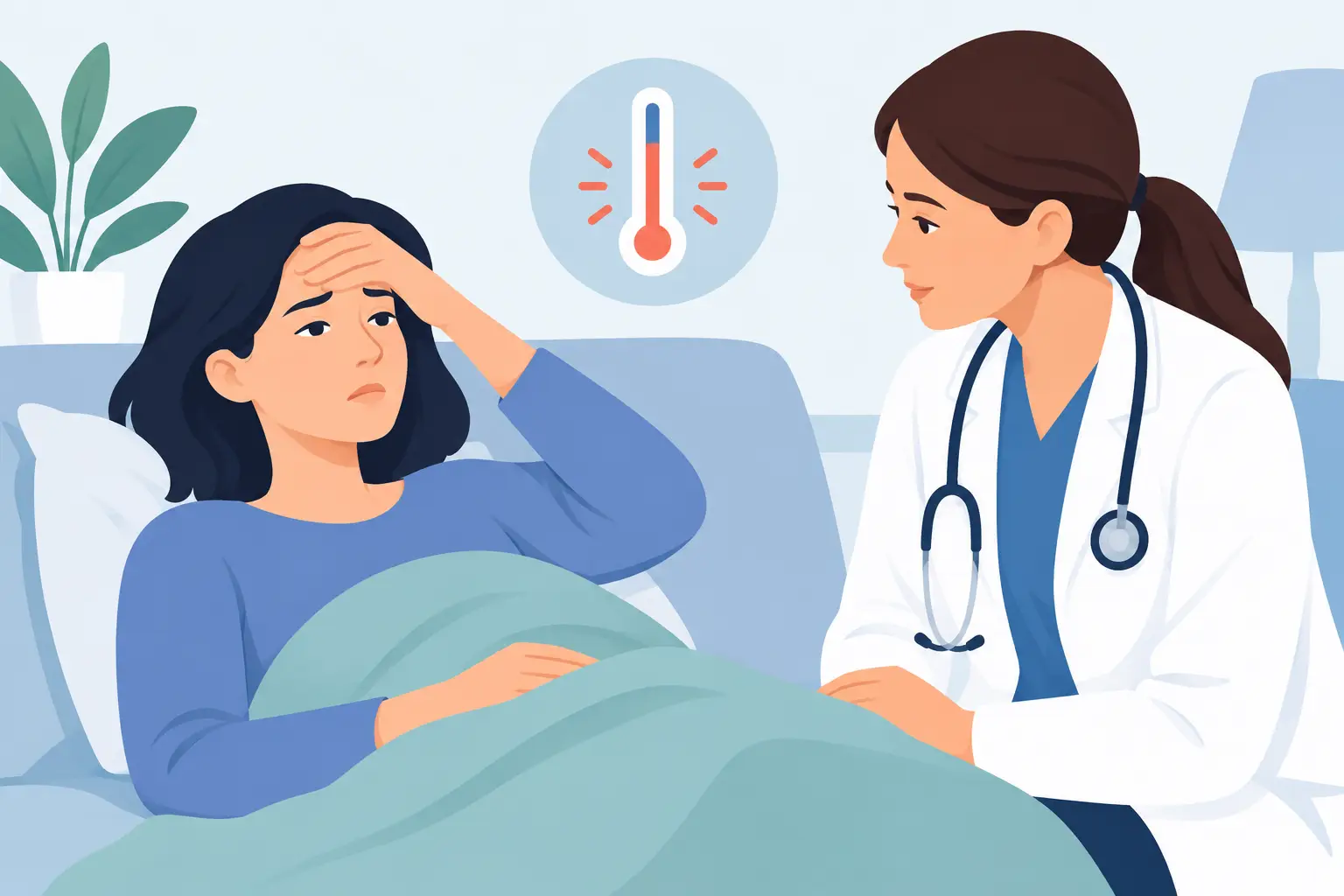
A fever can make a normal evening feel urgent, especially when it affects a young child or appears suddenly after a busy workday. Knowing when to seek care for fever can help you act promptly without unnecessary worry. The temperature matters, but so do the person’s age, symptoms, medical history, and how they look and behave between temperature checks.
A fever is generally a body temperature of 38°C or higher. It is often the body’s response to an infection, such as a cold, flu, COVID-19, ear infection, urinary tract infection, or stomach illness. Fever itself is not always dangerous, but it can occasionally signal a condition that needs same-day medical attention or emergency care.
When fever needs emergency care
Call 911 or go to the nearest emergency department right away if a person with a fever has trouble breathing, blue or grey lips or skin, severe chest pain, a seizure that does not stop quickly, or is difficult to wake. Emergency assessment is also needed for confusion, fainting, a sudden severe headache, new weakness, or a stiff neck with fever.
Seek emergency care for a rash that looks like small purple or red spots and does not fade when pressed, particularly if it occurs with fever or the person appears very unwell. This can be a sign of a serious infection.
For babies, take fever seriously. A baby younger than three months with a rectal temperature of 38°C or higher should be assessed urgently, even if they otherwise seem comfortable. Young infants can become ill quickly and may not show obvious symptoms early on.
Trust your observation as well as the thermometer. If your child is limp, unusually irritable and impossible to console, not making eye contact, or showing signs of severe dehydration, do not wait for the fever to rise further before getting help.
When to seek care for fever at a same-day clinic
Many fevers do not require an emergency department visit, but they do deserve medical assessment. Same-day walk-in or primary care can help identify the cause, check for dehydration or infection, and provide a treatment plan.
Consider same-day care when a fever is accompanied by persistent vomiting, significant ear pain, painful urination, a worsening cough, sore throat that makes swallowing difficult, severe sinus or facial pain, or abdominal pain. These symptoms may point to an infection that needs testing, monitoring, or treatment.
For children, arrange an assessment if fever lasts more than 48 to 72 hours, returns after improving, or is paired with a child who is getting worse rather than gradually recovering. A child may be tired and less hungry with a viral illness, but they should still have periods of alertness, be able to drink some fluids, and respond to you normally.
Children between three and six months old should be assessed promptly if they have a temperature of 39°C or higher, seem unwell, feed poorly, or have fewer wet diapers. For older babies and children, the number on the thermometer is less useful than their overall condition. A child with a lower fever who is lethargic or dehydrated may need quicker care than a child with a higher fever who is drinking, playing at times, and improving.
Adults should seek same-day medical advice for a fever of 40°C or higher, a fever that lasts more than three days, or fever that improves and then returns. Prompt assessment is also wise for adults with a weakened immune system, cancer treatment, an organ transplant, uncontrolled diabetes, significant heart or lung disease, or pregnancy. These conditions can change how quickly an infection needs treatment.
Watch for dehydration and changes in behaviour
Fever increases fluid loss, and dehydration can make someone feel much worse. In babies and children, look for fewer wet diapers, no tears when crying, a dry mouth, sunken eyes, or unusual sleepiness. In adults, warning signs include dizziness when standing, very dark urine, urinating much less than usual, confusion, or an inability to keep fluids down.
Encourage frequent small sips of water, oral rehydration solution, broth, or other suitable fluids. For a breastfed baby, offer feeds more often. Do not force large amounts at once if nausea is present. Small, regular amounts are often easier to tolerate.
Behaviour can be one of the clearest indicators of whether care is needed. A feverish person may want extra rest, but they should not be increasingly confused, hard to rouse, or unable to stay awake long enough to drink. If something feels noticeably different from their usual illness behaviour, it is reasonable to have them assessed.
Taking a temperature accurately
How you measure temperature affects the result. A rectal temperature is generally the most accurate method for infants. Oral thermometers can work well for older children and adults when used correctly. Ear thermometers may be convenient, but placement matters, and readings can be less reliable in very young children. Forehead scanners can be useful for screening, though a concerning reading may need confirmation with a more accurate method.
Write down the temperature, the time it was taken, how it was measured, and any medication given. This simple information helps a clinician understand the pattern of illness. It is also useful to note symptoms such as cough, rash, pain, vomiting, diarrhea, urinary concerns, recent travel, sick contacts, or new medications.
Comfort care at home while you monitor symptoms
For many common viral infections, home care is appropriate at first. Rest, fluids, light clothing, and a comfortably cool room can help. Avoid cold baths or alcohol rubs, which can cause shivering and discomfort without treating the underlying illness.
Fever medication may improve comfort, sleep, and fluid intake, but it does not need to be used solely to bring a temperature to normal. Acetaminophen or ibuprofen may be suitable depending on the person’s age, weight, health conditions, and other medications. Follow the package directions or advice from a pharmacist or clinician. Do not give aspirin to children or teenagers because of the risk of Reye’s syndrome.
Ibuprofen is not suitable for everyone. It may need to be avoided in people who are dehydrated, have kidney disease, have certain stomach conditions, take blood thinners, or are pregnant. Never double up on products that contain the same fever-reducing ingredient, especially combination cold and flu medicines.
Fever after surgery, travel, or a new medication
Some situations deserve quicker assessment even when the temperature is not extremely high. Fever after surgery, after a procedure, or with a wound that is increasingly red, swollen, painful, or draining should be reviewed. Fever after international travel may require specific testing, especially if it comes with diarrhea, rash, severe headache, or significant fatigue.
Contact a clinician promptly for fever that begins after starting a new medication, particularly if there is rash, facial swelling, wheezing, or peeling skin. These symptoms can signal a medication reaction and should not be managed by waiting at home.
Getting the right level of care in Calgary
For non-emergency fever concerns, a same-day clinic visit can offer a practical next step when your regular family doctor is unavailable. Seva Medical Clinic provides walk-in and family care for patients who need assessment, including during extended evening hours. A clinician can examine you or your child, determine whether testing is needed, and help you decide what to monitor at home.
If you are unsure whether symptoms need urgent attention, Alberta Health Link at 811 can provide nurse advice. When severe symptoms are present, choose emergency care rather than waiting for a clinic appointment.
Fever is common, but you do not have to make the decision alone. Pay attention to age, hydration, alertness, breathing, pain, and whether symptoms are improving or worsening. If your instincts tell you that something is not right, seeking care is a sensible next step.