When you wake up with a painful earache, a deep cough, or a sprained ankle after work, the question usually is not whether you need care. It is where to go. If you are wondering what can urgent care treat, the short answer is this: many non-life-threatening illnesses and injuries that need attention the same day, but do not require an emergency room.
That distinction matters. Choosing the right level of care can save time, lower stress, and help you get treatment faster. For Calgary families, working adults, and parents trying to make a decision quickly, it helps to know what urgent care is designed for and where its limits are.
What can urgent care treat?
Urgent care is best for health concerns that need prompt medical attention but are not severe enough to call 911 or visit the ER. In a walk-in medical setting, patients are commonly seen for infections, minor injuries, skin problems, stomach issues, and flare-ups of existing conditions.
For example, urgent care can often treat cold and flu symptoms that are not improving, sore throats, sinus infections, ear infections, fevers, coughs, and mild breathing concerns that still allow you to speak and breathe without significant distress. It is also a practical choice for urinary tract infections, pink eye, rashes, allergic reactions without signs of anaphylaxis, and minor cuts that may need cleaning or closure.
Many people are surprised by how broad the scope can be. Urgent care may also help with back pain, headaches that are uncomfortable but not sudden or severe, minor burns, strains, sprains, simple fractures depending on the clinic setup, and sports-related injuries. If you have nausea, vomiting, diarrhea, or dehydration that is mild to moderate, urgent care may also be appropriate.
Common illnesses urgent care can assess and treat
Respiratory and seasonal illnesses are some of the most common reasons people seek same-day care. A persistent cough, congestion, sore throat, or fever can leave you feeling too unwell to wait days for an appointment. Urgent care can assess symptoms, rule out more serious concerns, recommend treatment, and let you know if follow-up is needed.
It can also treat many routine infections. Ear infections in children and adults, sinus infections, throat infections, and urinary tract infections often respond well to assessment and treatment in an urgent care setting. Skin infections such as mild cellulitis, infected insect bites, or irritated wounds may also be managed there if they are caught early.
Digestive issues are another common reason to come in. Stomach pain, diarrhea, vomiting, constipation, and acid reflux symptoms can all range from minor to serious. Urgent care is a good place to start when symptoms are uncomfortable but stable. If the pain is severe, worsening, or located in a way that suggests appendicitis or another emergency, the ER is the safer choice.
What can urgent care treat when it comes to injuries?
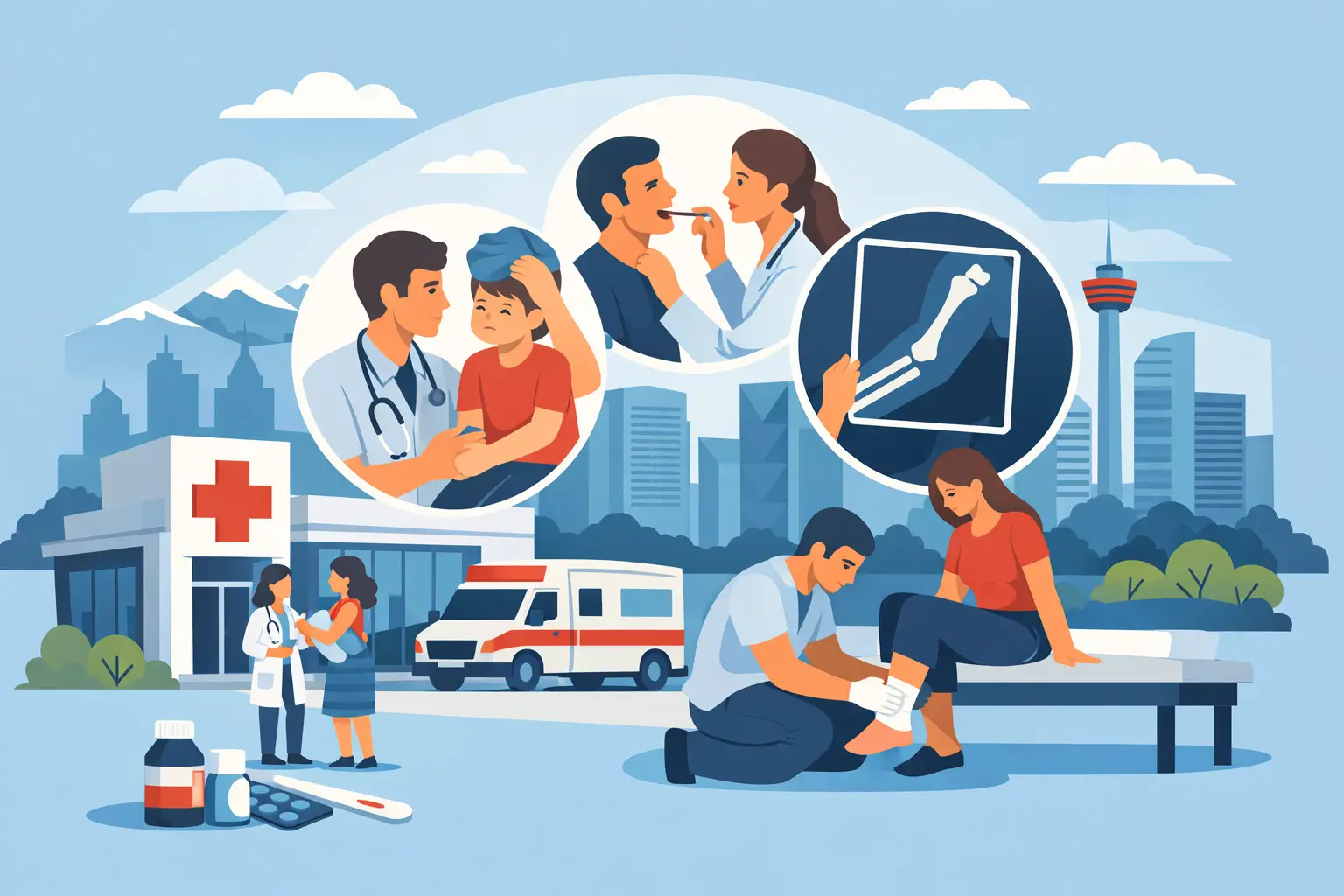
Urgent care is often the right fit for minor injuries that happen at home, at work, or during sports. That includes ankle sprains, mild knee injuries, bruises, muscle strains, small burns, minor cuts, and swelling after a fall. If you need a wound cleaned, a bandage applied, or an injury assessed to decide whether imaging or further care is needed, urgent care can help.
This is where clinical judgment matters. A jammed finger may be simple, or it may be fractured. A cut may need only cleaning, or it may need stitches. A twisted ankle could be a sprain, or it could involve a break. Urgent care can assess the injury, provide first-line treatment, and help determine next steps.
There are limits, though. A visible deformity, heavy bleeding that will not stop, a head injury with loss of consciousness, or an injury that prevents you from bearing weight may need emergency care instead. When an injury looks serious or is getting worse quickly, it is better not to wait.
When urgent care is a better choice than the ER
One of the biggest benefits of urgent care is convenience for problems that feel urgent but are not dangerous. If your child develops an ear infection in the evening, you cut your hand while cooking, or your sore throat becomes too painful to ignore, urgent care can offer timely treatment without the intensity of the emergency department.
For many patients, the real value is access. Same-day care, walk-in availability, and extended hours help bridge the gap between routine family medicine and true emergency care. That is especially helpful for people who work during the day, parents juggling school and childcare, or anyone who cannot wait several days to be seen.
At a community clinic like Seva Medical Clinic, that convenience also comes with continuity. If you need follow-up, preventive care, prescription support, or help managing an ongoing condition after the urgent issue is addressed, you are not starting over somewhere else.
When urgent care is not enough
Urgent care is not meant for life-threatening symptoms. Chest pain, sudden shortness of breath, signs of stroke, seizures, severe allergic reactions, major trauma, uncontrolled bleeding, or sudden confusion need emergency medical attention right away.
The same is true for severe abdominal pain, vomiting blood, signs of a serious head injury, or a very high fever in a vulnerable infant. If something feels dramatically wrong, or if symptoms are escalating quickly, the ER is the right place.
Sometimes the line is not perfectly clear. For instance, abdominal pain can be simple indigestion or something more serious. A headache can be related to stress or a neurological emergency. If you are unsure, it is reasonable to call a medical clinic, speak with a health professional, or seek emergency care if there is any concern about safety.
Urgent care for children, adults, and families
Families often rely on urgent care because health problems rarely happen on schedule. Children spike fevers at bedtime. Adults develop painful infections in the middle of a workweek. Minor injuries happen during sports, errands, and everyday routines.
Urgent care works well for all of these situations when the concern is non-emergent. Children can be assessed for common illnesses like ear infections, coughs, rashes, and mild fevers. Adults may seek care for infections, back pain, headaches, workplace injuries, or medication-related concerns. The goal is simple: timely treatment that feels approachable and efficient.
That said, age can affect decision-making. Babies, older adults, pregnant patients, and people with complex chronic conditions may need a lower threshold for higher-level care depending on their symptoms. It depends on the full picture, not just the symptom itself.
What to expect at an urgent care visit
Most urgent care visits begin with a discussion of your symptoms, how long they have been going on, and whether they are changing. A clinician will review your medical history, medications, allergies, and any relevant risk factors. From there, they may perform an exam, recommend treatment, prescribe medication when appropriate, and advise whether you need further testing or follow-up.
For patients, this means urgent care is not only about quick fixes. It is also about making a safe decision. Sometimes you leave with treatment and reassurance. Other times, you leave with clear guidance that you need imaging, specialist follow-up, or emergency assessment. Both outcomes are valuable because they move care forward without unnecessary delay.
If you are deciding whether to come in, think about the severity of the symptoms, how fast they are changing, and whether there are warning signs like breathing trouble, chest pain, confusion, severe pain, or heavy bleeding. If none of those are present, urgent care is often the right first step.
Making the right choice when you need care fast
Knowing what can urgent care treat helps take some of the guesswork out of a stressful moment. Many everyday medical problems fit well within urgent care, including infections, minor injuries, skin concerns, stomach issues, and painful symptoms that should not wait for a routine appointment.
The key is matching the problem to the right setting. Urgent care is there for same-day, non-emergency needs. The ER is there for severe, life-threatening, or rapidly worsening conditions. When you know the difference, you can get help faster and with more confidence.
If you are ever on the fence, trust the seriousness of the symptoms and err on the side of safety. Prompt care matters, and the best next step is the one that gets you the right attention at the right time.