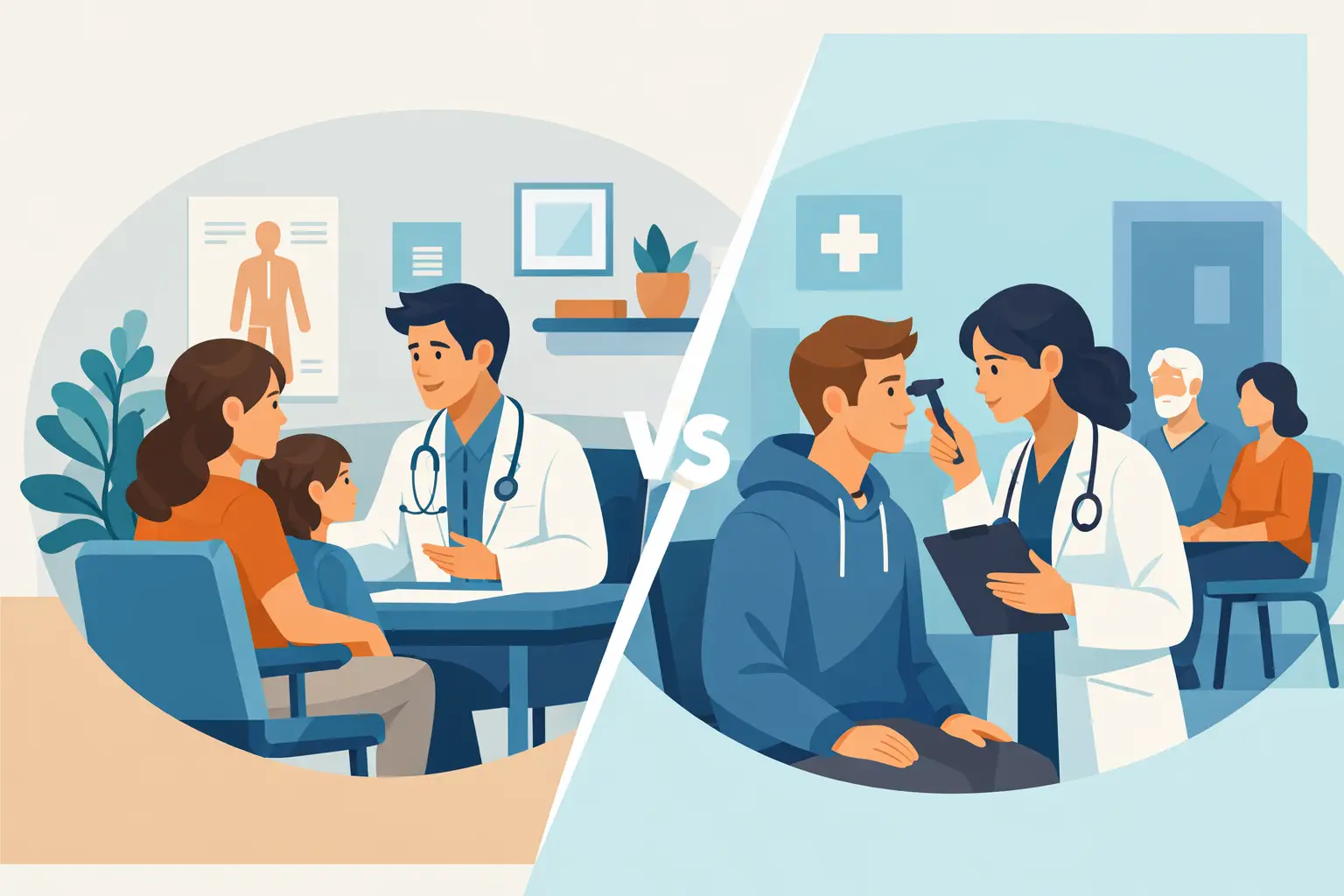
You wake up with a child who has a fever, a lingering cough that is not improving, or a prescription that needs renewal before the weekend. In moments like these, the question is not just where to get care, but what kind of care makes the most sense. When people compare family doctor vs walk in options, they are usually trying to balance speed, continuity, and convenience.
The good news is that this is not always an either-or decision. Both care models have a clear role in primary care, and knowing when to use each one can save time, reduce stress, and help you get the right support sooner.
Family doctor vs walk in: the main difference
A family doctor provides ongoing, relationship-based care. This is the physician who gets to know your medical history over time, tracks changes in your health, follows up on test results, and helps manage both routine and more complex concerns across different stages of life.
A walk-in clinic is designed for timely access when you need care sooner and cannot wait for a scheduled appointment. That might mean a same-day issue such as a sore throat, rash, minor infection, mild injury, medication refill, or another non-emergency concern that needs prompt attention.
The biggest difference is continuity. With a family doctor, your care is connected over time. With walk-in care, the priority is speed and convenience for immediate needs.
That does not mean walk-in care is lower quality, or that a family doctor is always the faster option. It depends on your concern, how urgent it feels, and whether ongoing follow-up is likely to matter.
When a family doctor is usually the better choice
If your health concern is ongoing, recurring, or part of a bigger picture, a family doctor is often the right place to start. Continuity matters most when your physician needs context, not just symptoms.
This includes preventive care such as annual checkups, screening discussions, immunizations, and long-term health planning. It also includes chronic disease management for concerns like high blood pressure, diabetes, asthma, or thyroid conditions. These are not one-visit issues. They benefit from a doctor who can monitor patterns, adjust treatment, and keep a full record of what has or has not worked.
A family doctor is also valuable for women’s health, men’s health, mental health concerns, and pediatric care. If you are talking about anxiety that has been building for months, irregular menstrual cycles, recurring migraines, or a child with repeated ear infections, the details over time matter. A physician who knows your history can often make more informed decisions and spot trends that a single visit may miss.
There is also a practical side to this. A family doctor can coordinate referrals, review lab work in context, and create a care plan that feels consistent rather than fragmented. For busy families, that relationship can make healthcare feel simpler.
When walk-in care makes more sense
Walk-in care is often the right answer when the issue is urgent enough to need attention soon, but not severe enough for emergency care. If you have a new problem that cannot reasonably wait several days, a walk-in visit can be a smart and efficient option.
Common examples include cold and flu symptoms, sore throats, ear pain, pink eye, urinary symptoms, minor skin infections, rashes, sprains, mild allergic reactions, and small cuts that may need assessment. Walk-in care can also help with prescription renewals in some cases, especially when timing is the main issue.
For working adults and parents, convenience matters. Evening hours, same-day access, and the ability to be seen without a long delay can make a real difference. If your child gets sick after school or you notice a painful infection late in the day, being able to get assessed quickly is often exactly what you need.
Walk-in care is also useful if you do not yet have a family doctor. In many communities, that is a reality for many patients. In that situation, a walk-in clinic may serve as your access point for immediate care while you look for a physician accepting new patients.
The trade-off: continuity vs speed
Most people are not confused about what hurts. They are confused about where to go first. That decision often comes down to one trade-off: continuity versus speed.
A family doctor offers the advantage of knowing you. They understand your baseline health, your medications, your past results, and your broader needs. That can lead to more tailored care, especially when symptoms are not straightforward.
A walk-in clinic offers the advantage of access. You may be seen sooner, outside standard office hours, or without needing to plan far in advance. When you are uncomfortable and want answers quickly, that can be the deciding factor.
Neither option is automatically better. The right choice depends on whether your issue needs a fast visit, a long-term care plan, or both.
Family doctor vs walk in for common situations
For preventive care, a family doctor is usually the better fit. These visits work best when your provider can review your history, risk factors, and long-term goals.
For chronic conditions, a family doctor is generally the best choice, especially when medication adjustments, repeat testing, or ongoing monitoring are involved. Consistent follow-up can improve outcomes and reduce gaps in care.
For sudden minor illnesses or injuries, walk-in care is often the practical option. If the issue is new, uncomfortable, and needs prompt attention, speed matters.
For mental health concerns, it depends. If you are in ongoing treatment or need follow-up, a family doctor offers better continuity. If you need to speak with someone soon about a new concern and cannot get a timely appointment, walk-in access can still be an important first step.
For children, both can be useful. A family doctor is ideal for routine growth, development, vaccinations, and recurring concerns. Walk-in care can help when a child becomes sick unexpectedly and same-day care is needed.
What walk-in clinics do not replace
Walk-in care is valuable, but it does have limits. It is not a replacement for emergency care when symptoms are severe. Chest pain, trouble breathing, signs of stroke, major injuries, heavy bleeding, or other potentially life-threatening concerns need emergency assessment right away.
It also does not fully replace the long-term value of having a regular family physician. If you rely only on one-off visits over time, your care can become fragmented. Test results may need follow-up, repeat concerns may not be seen as part of a pattern, and preventive care can fall through the cracks.
That is why a hybrid model can be especially helpful. A clinic that offers both family practice and walk-in access gives patients more flexibility. You can come in for urgent non-emergency needs when timing matters, while still building an ongoing relationship for routine and long-term care. For many Calgary families, that combination is simply more practical.
How to choose the right option in the moment
Start by asking two questions: How urgent is this, and will follow-up likely matter?
If the concern is new, painful, or worsening and you need help the same day, walk-in care may be the best fit. If the concern is part of a longer story, or you know you will need repeat visits, tests, or medication management, a family doctor is often the better starting point.
Also consider your schedule and support needs. Parents managing school pickups, adults working late, and patients who need evening care often benefit from clinics that offer flexible access. Convenience is not a small detail when it affects whether you get seen at all.
If you are unsure, choose the setting that gets you assessed in a safe and timely way. It is better to be seen and guided appropriately than to wait too long trying to make the perfect choice.
At Seva Medical Clinic, patients often look for exactly that balance – dependable family medicine when continuity matters, and walk-in access when life does not wait for an appointment.
The better question is not which one wins
When people search family doctor vs walk in, they are often looking for one clear winner. In real life, healthcare is rarely that simple. A family doctor supports your health over time. A walk-in clinic helps when something comes up now. Many patients need both at different points in the year.
The most useful choice is the one that matches your needs today while keeping your longer-term care on track. If you can find a clinic that offers both access and continuity, you do not have to choose convenience at the expense of connection. You can get care that fits real life, when you need it most.