A sharp ache after lifting a box, stiffness that makes getting out of bed difficult, or pain that travels down one leg can all feel very different. Back pain causes are just as varied. While many episodes improve with simple care and time, persistent or severe pain deserves a proper medical assessment, especially when it interferes with work, sleep, parenting, or daily movement.
Common Back Pain Causes
The back is a complex system of bones, discs, muscles, ligaments, nerves, and joints. Pain can come from one area or several at once. A medical professional considers where the pain is located, how it started, what makes it better or worse, and whether other symptoms are present.
Muscle strain and ligament sprain
A strain is one of the most common reasons for sudden lower back pain. It may happen after lifting, twisting, shovelling snow, moving furniture, starting an unfamiliar workout, or spending a long day in an awkward position. Sometimes there is one clear moment of injury. Other times, pain builds gradually after repeated bending, sitting, or physical work.
Muscle-related pain often feels sore, tight, or cramp-like. It may be worse with certain movements and improve with rest or a change in position. Rest does not need to mean staying in bed for days. Gentle movement is often more helpful than prolonged inactivity once serious injury has been ruled out.
Poor posture and prolonged sitting
Long commutes, desk work, driving, and time spent looking down at a phone can place ongoing stress on the neck, upper back, and lower back. Posture is rarely the only cause of pain, but staying in one position for too long can contribute to stiffness and muscle fatigue.
Small adjustments can make a difference: change positions regularly, use support for your lower back when sitting, keep screens closer to eye level, and build short walking or stretching breaks into the day. The right approach depends on your work, fitness level, and the specific pattern of your symptoms.
Disc problems and nerve irritation
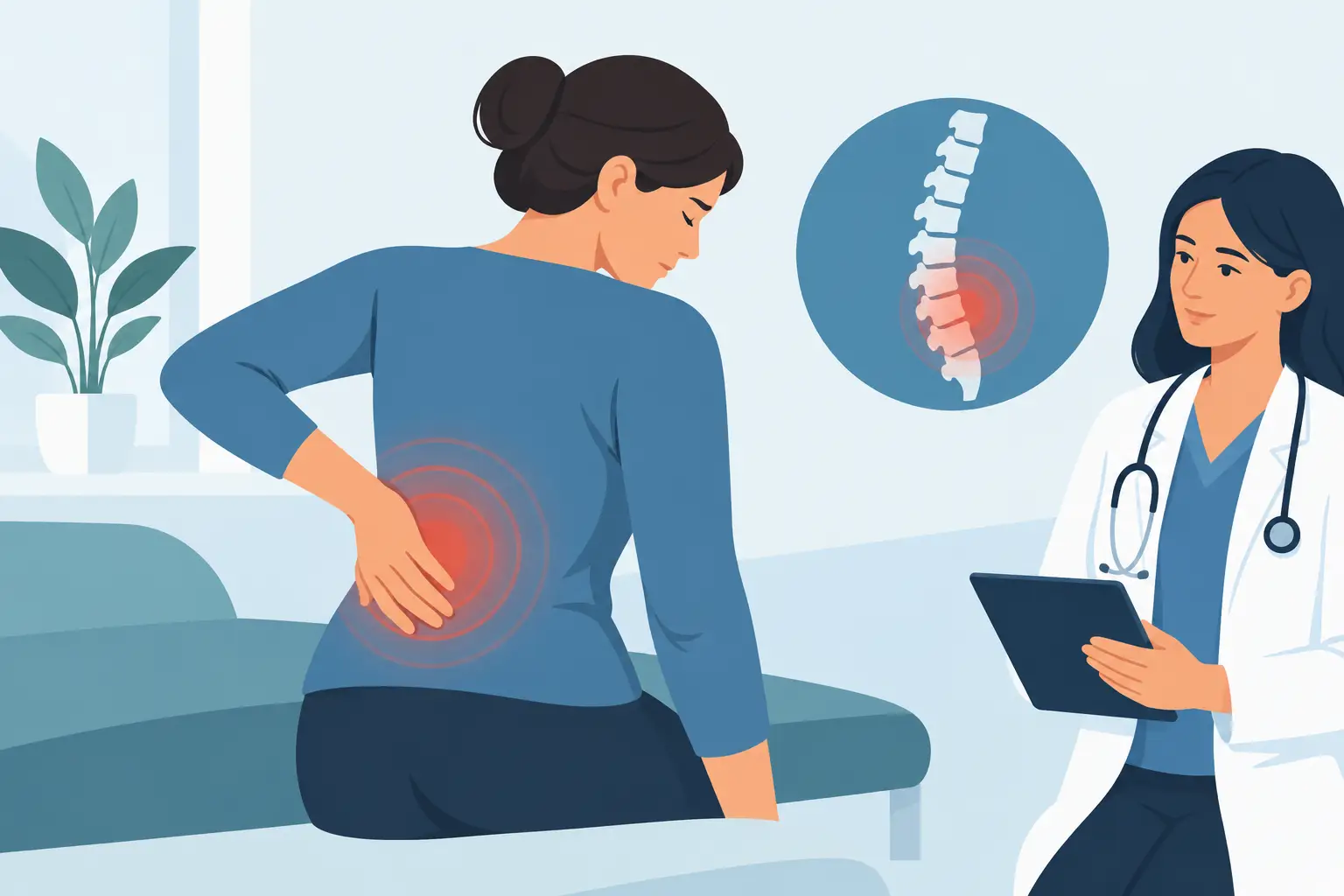
The discs between the bones of the spine act as cushions. With age, normal wear, or injury, a disc may bulge or herniate and irritate a nearby nerve. This can cause pain in the back along with symptoms that travel into the buttock, leg, or foot. Many people call this sciatica.
Nerve-related pain may feel sharp, burning, electric, or tingling. It can also come with numbness or weakness. Not every case of leg pain is sciatica, and not every disc change seen on an image causes symptoms. A clinical examination helps connect test results to what a patient is actually experiencing.
Arthritis and age-related spinal changes
Osteoarthritis can affect the small joints of the spine, particularly as people get older. Spinal stenosis, a narrowing of spaces around nerves, may also develop over time. These conditions can cause stiffness, aching, or pain that occurs with standing and walking.
Age-related changes on an X-ray or MRI are common, including in people who have no pain. For that reason, imaging is not automatically needed for every sore back. It is most useful when the findings are likely to change treatment decisions or when symptoms suggest a more serious condition.
Osteoporosis and compression fractures
Osteoporosis weakens bones and raises the risk of fractures. A compression fracture in the spine may occur after a fall, but in severe osteoporosis it can sometimes happen with a minor movement or without a memorable injury. Sudden back pain in an older adult, especially after a fall or in someone with known bone loss, should be assessed promptly.
Risk can increase after menopause, with long-term use of certain medications such as steroids, low body weight, smoking, and some chronic health conditions. Prevention and treatment plans are individualized and may include lifestyle changes, nutrition, testing, and medication.
Pain referred from other areas of the body
Not all back pain starts in the spine. Kidney infections or stones can cause flank or back pain, often with urinary symptoms, fever, nausea, or severe waves of pain. Conditions involving the abdomen, pelvis, or reproductive system can sometimes be felt in the lower back as well.
Stress, low mood, poor sleep, and ongoing worry can also make pain feel more intense and harder to manage. This does not mean the pain is “all in your head.” It means the nervous system, physical health, and emotional wellbeing all affect recovery and should be considered together.
When Back Pain Needs Urgent Care
Most back pain is not an emergency, but certain symptoms need immediate attention. Call 911 or go to the nearest emergency department if back pain occurs with new loss of bladder or bowel control, numbness around the groin or inner thighs, significant or worsening leg weakness, or inability to walk safely.
Prompt assessment is also needed after a major injury, such as a motor vehicle collision or a serious fall. Seek urgent medical advice if pain is accompanied by fever, unexplained weight loss, a history of cancer, recent serious infection, or pain that is severe and constant at night. These symptoms do not always mean a serious problem is present, but they should not be ignored.
For infants, children, and teenagers, persistent back pain should also be reviewed. Back pain is less commonly caused by simple strain in younger children, so a clinician may need to look more closely at the cause.
What You Can Do for Mild Back Pain
For a new episode of mild pain without warning signs, short periods of relative rest can be reasonable. Avoid the activity that clearly triggered pain, but try not to stop all movement. Gentle walks, light daily activity, and comfortable positions can prevent the stiffness that often comes with staying in bed or on the couch for too long.
Heat can relax tight muscles, while ice may feel better after a recent strain or flare-up. Some people benefit from over-the-counter pain relief, but the safest option depends on your health history, current medications, kidney function, stomach conditions, pregnancy status, and other factors. Ask a pharmacist or healthcare provider if you are unsure what is appropriate for you.
As symptoms improve, gradual strengthening and mobility work can help lower the chance of future episodes. A plan should be realistic. A warehouse worker may need guidance on lifting and pacing, while someone who works at a computer may benefit more from regular movement breaks and workstation changes.
When to Book a Clinic Visit
Arrange a medical assessment if pain lasts longer than a few weeks, keeps returning, limits normal activities, or is not improving with basic self-care. Make an appointment sooner if pain shoots down a leg, causes persistent tingling or numbness, or began after a fall or injury.
A clinician can review your symptoms, examine your strength and movement, and discuss whether medication, physiotherapy, imaging, or other support may help. The goal is not always to find one perfect explanation immediately. It is to identify serious concerns early, relieve symptoms safely, and create a practical plan for recovery.
For Calgary patients who need non-emergency assessment, Seva Medical Clinic provides accessible care for new or ongoing concerns, including back pain that is affecting daily life. Bringing a brief note of when the pain began, what triggers it, and any treatments you have tried can make the visit more efficient.
Back pain can be frustrating, particularly when it disrupts sleep, work, or time with family. Paying attention to warning signs and seeking care when symptoms persist gives you a clearer path forward and helps you return to the activities that matter to you.