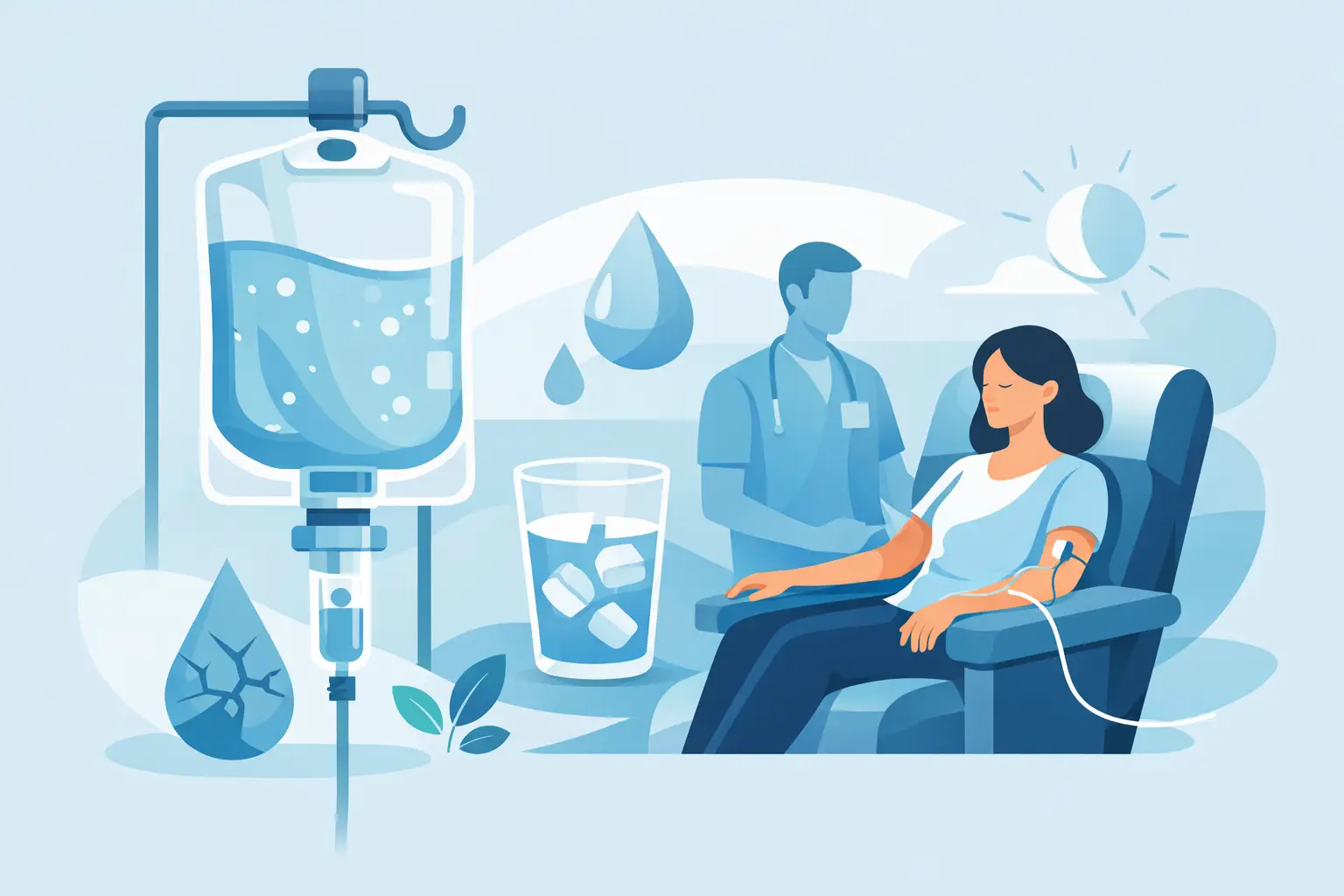
A pounding headache, dizziness when you stand up, dry mouth, and that drained, shaky feeling can all point to the same problem – your body needs fluids. For some people, drinking water and resting is enough. For others, iv therapy for dehydration can be a faster and more effective way to recover, especially when nausea, vomiting, diarrhea, or illness make it hard to keep fluids down.
What dehydration actually does to the body
Dehydration is more than feeling thirsty. When your body loses more fluid than it takes in, it affects circulation, temperature control, blood pressure, and normal organ function. Even mild dehydration can leave you tired, foggy, and weak. As it becomes more significant, symptoms can escalate to rapid heartbeat, low urine output, muscle cramps, confusion, and fainting.
This is one reason dehydration can feel worse than people expect. It does not only reduce water levels. It can also upset electrolyte balance, including sodium and potassium, which the body needs for muscles, nerves, and heart function.
The cause matters too. Someone who is mildly dehydrated after a hot day may improve quickly with oral fluids. Someone with gastroenteritis, a high fever, heat exhaustion, pregnancy-related nausea, or ongoing diarrhea may need a different approach.
When iv therapy for dehydration may be appropriate
IV treatment is usually considered when a person needs fluids quickly or cannot rehydrate well by mouth. This can happen if swallowing fluids is difficult, vomiting continues, or symptoms are progressing despite trying to drink water or oral rehydration solutions.
In practical terms, iv therapy for dehydration may help when you are feeling significantly weak, lightheaded, or persistently nauseated, and home care is not turning things around. It can also be useful for people who have lost fluid through stomach illness, prolonged heat exposure, intense physical exertion, or certain medical conditions.
That said, it is not the right solution for every case. If dehydration is mild and you are able to drink and keep fluids down, oral rehydration is often enough. IV fluids are a medical treatment, not a shortcut or wellness trend, so the decision should be based on symptoms, overall health, and clinical assessment.
What happens during IV dehydration treatment
The process is straightforward, but it should always start with a medical assessment. A healthcare provider reviews your symptoms, checks vital signs, asks about the cause of fluid loss, and looks for signs that point to mild, moderate, or more serious dehydration.
If IV treatment is appropriate, a small intravenous line is placed into a vein, usually in the arm or hand. Fluids are then given directly into the bloodstream. This bypasses the digestive system, which is why it can work well when nausea or vomiting are making oral fluids difficult.
The type and amount of fluid depend on the situation. In many outpatient cases, normal saline is commonly used. Some patients may also need additional treatment based on the cause of dehydration, such as anti-nausea medication, fever management, or advice on how to continue rehydrating at home.
Most people tolerate IV fluids well. You may feel improvement gradually during treatment or shortly after, especially if dehydration has been the main cause of your symptoms. Common early signs of improvement include less dizziness, better energy, reduced headache, and feeling more steady when standing.
How long it takes to feel better
This depends on how dehydrated you are, what caused it, and whether another illness is still active. Some people feel noticeably better within an hour. Others improve more slowly, especially if they are recovering from a stomach bug, infection, or prolonged fluid loss.
IV fluids can replace lost volume efficiently, but they do not fix every underlying issue on their own. If dehydration is tied to an ongoing illness, symptoms may continue until that condition is also treated. This is why proper assessment matters. Feeling run down could be dehydration, but it could also be something more complex.
Signs you should not ignore
There is a line between dehydration that can be managed in an outpatient setting and dehydration that may need urgent or emergency care. If someone is confused, hard to wake, having chest pain, severe shortness of breath, fainting repeatedly, or showing signs of severe weakness or severe illness, they need urgent medical attention right away.
Children, older adults, and people with chronic conditions can also become dehydrated more quickly and may not show the same symptoms as healthy adults. In babies and young children, warning signs can include fewer wet diapers, no tears when crying, unusual sleepiness, or sunken eyes. In older adults, dehydration may show up as confusion, sudden weakness, or reduced urination rather than obvious thirst.
Pregnant patients should also be assessed promptly if vomiting is persistent or they are unable to keep fluids down. What looks like simple dehydration can escalate more quickly when fluid intake has been poor for more than a day.
IV therapy versus drinking fluids
People often ask whether IV treatment is always better than drinking fluids. The honest answer is no. If you can drink normally and absorb fluids well, oral rehydration is usually the first step. It is less invasive, effective for many cases, and appropriate for mild dehydration.
IV therapy becomes more useful when the body needs help catching up fast or when oral intake is not realistic. This includes repeated vomiting, moderate dehydration symptoms, or cases where weakness and dizziness are making it hard to function safely.
There is also a trade-off to keep in mind. IV treatment is more direct, but it still involves a needle, clinical monitoring, and medical decision-making. It should not replace basic hydration habits, and it is not meant for every headache, every workout, or every day of fatigue.
Who may benefit from faster assessment
Working adults, parents caring for sick children, and anyone trying to decide whether to wait it out at home often need clear guidance, not guesswork. If symptoms are worsening, if you are not improving with fluids, or if nausea and vomiting are limiting what you can drink, it makes sense to get assessed sooner rather than later.
This is especially true when dehydration is interfering with normal daily activities. If standing makes you feel faint, if you have barely urinated, or if you are too unwell to manage work, childcare, or basic tasks, a same-day medical evaluation can help determine whether IV fluids are appropriate or whether another treatment is needed.
For Calgary patients looking for practical, timely care, this kind of assessment can often be handled in an outpatient clinic setting when the situation is non-emergency. Seva Medical Clinic provides accessible care for everyday medical concerns, including timely assessment when dehydration symptoms need attention.
What to expect after treatment
After IV therapy, many patients are advised to continue drinking fluids, rest, and follow a gradual return to regular meals if stomach symptoms are settling. If dehydration happened because of heat, exercise, or illness, you may also be given guidance on electrolyte replacement and warning signs to watch for at home.
Recovery is not always instant. You might feel better overall but still tired for the rest of the day. That can be normal, particularly if you have been sick or have not eaten much. What matters is that symptoms are moving in the right direction.
If symptoms return quickly, if vomiting continues, or if new symptoms develop, further assessment may be needed. Dehydration can sometimes be the result of an infection, medication side effect, blood sugar issue, or another medical problem that needs direct treatment.
Preventing dehydration from getting worse
The best time to address dehydration is early. Small, frequent sips of water or oral rehydration fluids can help when plain water feels difficult to tolerate. During hot weather, physical activity, fever, or stomach illness, fluid needs often rise quickly.
It also helps to pay attention to early clues. Dark urine, dry mouth, fatigue, headache, and dizziness are often signs to slow down and rehydrate before symptoms become more serious. Parents should keep an especially close eye on children with vomiting, diarrhea, or fever, because they can decline faster than adults.
If you are unsure whether symptoms are mild or something more significant, medical advice can prevent a longer recovery. The goal is not only to replace lost fluids, but to make sure the cause is understood and that you are getting the right level of care.
When dehydration leaves you too unwell to bounce back with water and rest alone, timely treatment can make a real difference. Getting assessed early can help you feel better sooner and avoid the stress of waiting for symptoms to become harder to manage.