A person may come in because they have not slept properly for weeks, feel constantly on edge, or no longer enjoy the routines that used to keep them grounded. The question is often direct: mental health counselling versus medication – which one do I need?
There is no single answer that fits every person. Counselling and medication can each be helpful, and many people benefit from using both at different points in their care. The right approach depends on your symptoms, health history, daily responsibilities, personal preferences, and how urgently you need relief.
A family physician or primary care provider can help you sort through these choices without judgment. You do not need to have everything figured out before asking for support.
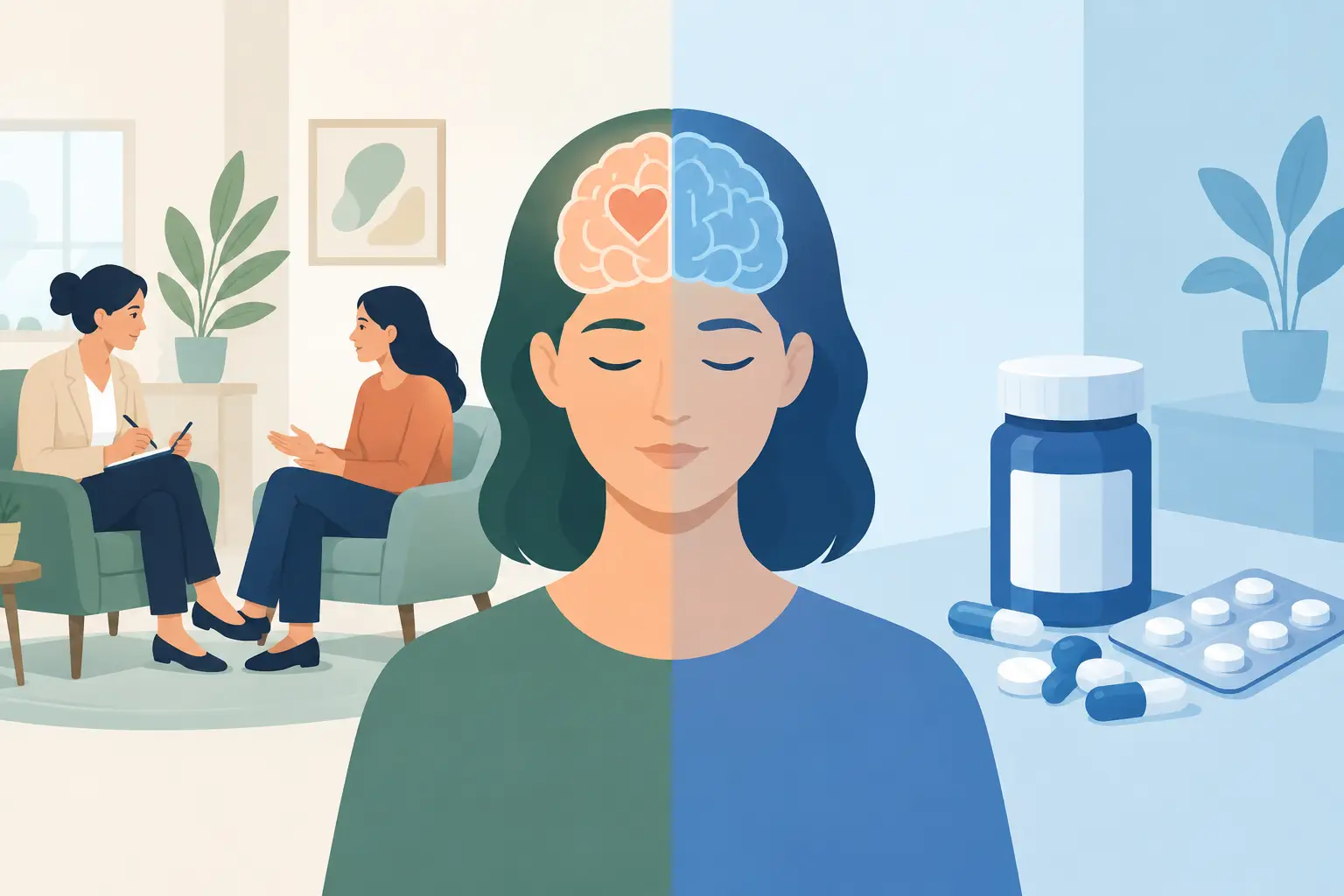
Mental health counselling versus medication: the key difference
Counselling is a structured conversation with a qualified mental health professional. It focuses on understanding what is happening in your life, building practical coping skills, and changing patterns that may be keeping you stuck. Depending on the provider and approach, counselling may help with anxiety, low mood, grief, trauma, relationship stress, parenting challenges, work pressure, and more.
Medication is prescribed by a physician or nurse practitioner to help manage symptoms that affect mood, sleep, attention, anxiety, or other aspects of mental health. It does not erase difficult experiences or solve every source of stress. Its purpose is to reduce symptoms enough that daily life, relationships, work, sleep, and other treatments become more manageable.
Counselling often asks, “What is contributing to this, and what skills or support could help?” Medication often asks, “Can we reduce the intensity of these symptoms so you can function and recover?” Both questions matter.
When counselling may be a good first step
Counselling can be especially useful when your distress is connected to a difficult event, a major change, relationship conflict, burnout, grief, or recurring thought patterns. It can also be a strong option when symptoms are mild to moderate and you are able to participate regularly in appointments and practice strategies between sessions.
For example, someone dealing with panic symptoms may learn how to recognize physical sensations, challenge fearful thoughts, and gradually face situations they have started avoiding. A parent feeling overwhelmed may work on boundaries, communication, and realistic routines. These are skills that can continue to help long after counselling ends.
Counselling is not only for a crisis. It can be preventive care, too. Many people seek support before stress becomes unmanageable.
That said, counselling can take time. Finding a provider who feels like a good fit may require a few calls or appointments, and progress is not always linear. The cost and availability of counselling can also vary. In Alberta, medically necessary visits with a family physician are generally covered for eligible residents, while counselling coverage depends on the professional, your workplace benefits, and the program available to you.
When medication may be worth considering
Medication may be considered when symptoms are moderate to severe, persistent, or making it difficult to manage basic daily tasks. This may include depression that affects appetite and motivation, anxiety that causes frequent panic or severe physical symptoms, or insomnia that is worsening your ability to cope.
It may also be appropriate when someone has tried counselling and self-care strategies but is still struggling, or when previous medication has been helpful. Some conditions, including bipolar disorder, psychosis, severe depression, and certain anxiety disorders, may need medication as an important part of treatment.
Starting medication is a shared decision. Your provider should review why a medication is being considered, what benefits are realistic, possible side effects, how long it may take to work, and when you should follow up. Many medications used for anxiety or depression take several weeks to show their full effect. A follow-up plan matters because the first option or dose is not always the best fit.
Medication can be very helpful, but it is not a personal failure or a shortcut. It is one medical tool among many. It also should not be stopped suddenly without speaking with the prescriber, as some medications need to be adjusted gradually.
Why combined care often makes sense
The choice is not always counselling or medication. For many people, it is counselling and medication, at least for a period of time.
Medication may lower the volume of intense symptoms. Counselling can then help a person address the habits, stressors, beliefs, relationships, or experiences underneath those symptoms. Someone who is too anxious to leave home, for instance, may find it easier to take part in therapy once their physical anxiety symptoms are better controlled. Someone feeling more stable on medication may use counselling to develop lasting tools for preventing a return of symptoms.
Combined care is not automatically necessary. Some people do well with counselling alone, while others may need medication first because their symptoms are severe. The most useful plan is one you can realistically follow and revisit with your care team.
What a primary care visit can help you understand
Mental health symptoms can overlap with physical health concerns. Fatigue, poor concentration, changes in sleep, agitation, and low mood may be affected by stress, but they can also be related to thyroid concerns, anemia, chronic pain, medication side effects, hormone changes, substance use, or other medical issues.
A primary care appointment provides space to look at the whole picture. Your provider may ask when symptoms started, whether they are changing, how they affect home and work, what supports you have, and whether you have had similar experiences before. They may also discuss sleep, nutrition, alcohol or cannabis use, current medications, and physical symptoms.
This conversation is not a test you can fail. Honest answers help your provider recommend care that is safer and more relevant to your situation.
Questions to bring to your appointment
If you are unsure where to start, it can help to write down a few details before you come in. Consider what symptoms are hardest, how long they have been present, and what you hope will improve first. You can also ask whether counselling, medication, or both may be appropriate; what side effects to watch for; how soon you should expect a change; and when you should check in again.
If cost, appointment timing, transportation, child care, language, or privacy makes it harder to access counselling, say so. A plan only works if it fits your real life. Your provider may be able to discuss practical options and supports that are more accessible.
When to seek urgent help
Mental health concerns deserve prompt attention when you feel unsafe or unable to cope. Seek immediate emergency help by calling 911 or going to an emergency department if you are at risk of harming yourself or someone else, have a plan to act on suicidal thoughts, are experiencing hallucinations or severe confusion, or cannot care for yourself safely.
For concerns that are urgent but not life-threatening, do not wait until symptoms become overwhelming. A same-day medical assessment can help you discuss next steps, review medication concerns, and connect with appropriate support.
Care should fit the person, not the label
There is no prize for handling everything alone, and there is no shame in needing more than one kind of support. Some people need a short course of counselling during a difficult season. Others benefit from ongoing therapy, medication, regular primary care follow-ups, or a combination that changes over time.
At Seva Medical Clinic, a primary care visit can be a practical starting point when low mood, anxiety, sleep changes, or stress are getting in the way of daily life. You can talk through your symptoms, medical history, and options in a respectful setting.
The next helpful step may be small: book an appointment, speak honestly about what has changed, and let a healthcare professional help you make a plan that feels possible. You do not have to decide between counselling and medication before you ask for care.